


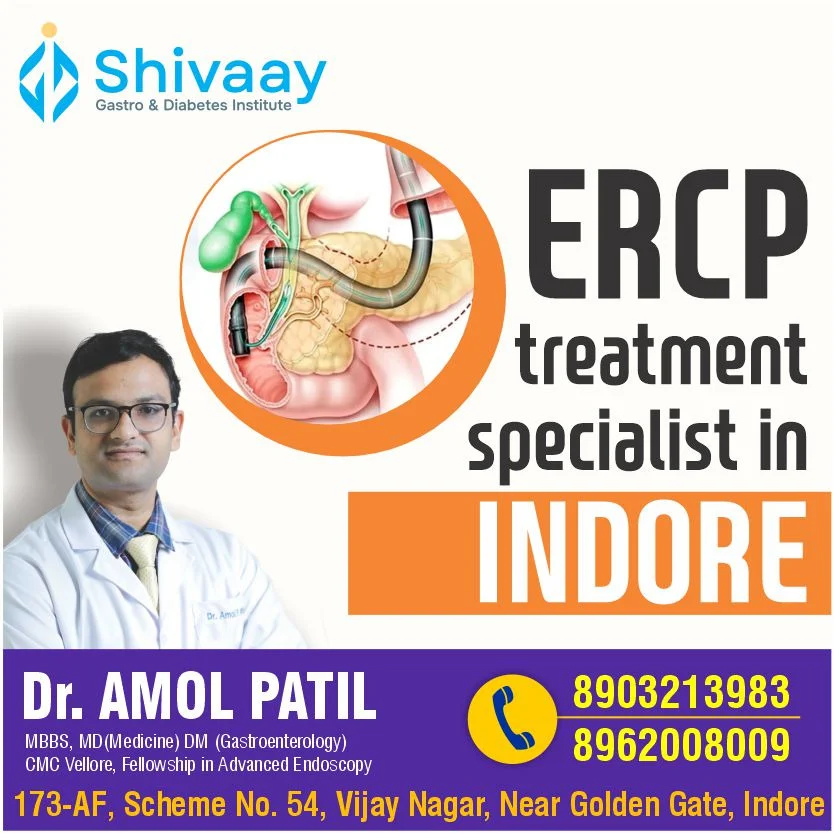
ERCP Treatment Specialist in Indore for Advanced Bile Duct and Pancreatic Care
Problems involving the bile duct, gallbladder, liver or pancreas may cause severe abdominal discomfort, jaundice, fever, nausea or abnormal liver-function reports. In some cases, medicines alone may not resolve the problem because a stone, narrowing or blockage is preventing the normal flow of bile or pancreatic fluid. ERCP is an advanced endoscopic procedure that can help diagnose and treat selected conditions without traditional open surgery.
Patients searching for an ERCP Treatment Specialist in Indore can consult Shivaay Advance Gastro & Liver Centre – Dr. Amol Patil for detailed evaluation, report assessment and an individualised treatment approach based on the underlying digestive condition.
ERCP stands for Endoscopic Retrograde Cholangiopancreatography. It is a specialised procedure used to examine and treat problems affecting the bile ducts and pancreatic ducts.
The bile ducts carry bile from the liver and gallbladder into the small intestine. Bile supports the digestion of fats. The pancreatic ducts transport digestive enzymes from the pancreas. When either pathway becomes blocked, narrowed, injured or infected, patients may develop pain, jaundice, fever and digestive complications.
During an ERCP procedure in Indore, a flexible endoscope is gently passed through the mouth, food pipe and stomach until it reaches the first part of the small intestine. A thin tube is then guided into the duct opening. Contrast imaging helps identify stones, narrowing, leakage or obstruction.
Small medical instruments may be passed through the endoscope to provide treatment during the same procedure.
ERCP is generally recommended when imaging tests or symptoms suggest a problem inside the bile duct or pancreatic duct that may require treatment. It is not routinely advised for every stomach or gallbladder complaint.
A gastroenterologist may consider advanced ERCP treatment in Indore for:
The decision is made after reviewing symptoms, blood reports, ultrasound findings, MRCP, CT scan or other relevant investigations.
Gallstones usually develop inside the gallbladder. Sometimes, a stone moves out of the gallbladder and becomes trapped inside the common bile duct. This condition may block bile flow and cause sudden symptoms.
Possible signs include:
During bile duct stone removal in Indore, ERCP may allow the specialist to remove the obstructing stone through the endoscopic route. A small opening may be created or widened so that the stone can be removed using a balloon or retrieval basket.
In some situations, a temporary stent may be placed to maintain bile drainage until complete treatment is possible.
Not every episode of abdominal pain means that ERCP is required. However, certain symptoms should be evaluated promptly, particularly when they occur together.
Consult a gastroenterologist in Indore when you experience:
Severe pain with jaundice and fever may indicate a serious blockage or infection. Such symptoms require timely medical attention rather than home treatment.
ERCP is valuable because diagnosis and treatment may be completed during the same session. The exact procedure depends on the patient’s condition and clinical findings.
A balloon or specialised basket may be used to remove a stone from the bile or pancreatic duct.
A controlled opening may be made at the duct entrance to improve drainage or create sufficient space for stone removal.
A small plastic or metal tube can be inserted into a narrowed duct. The stent helps keep the passage open and allows bile or pancreatic fluid to flow more freely.
A narrowed area, also called a stricture, may be widened. A stent may then be positioned to reduce obstruction.
A leak may develop after gallbladder surgery or another abdominal procedure. ERCP can sometimes redirect bile flow and support healing by placing a stent.
When a suspicious narrowing or abnormal area is identified, small samples may be collected for laboratory examination.
A blocked bile duct can prevent bile from reaching the small intestine. The blockage may result from stones, inflammation, scarring, previous surgery, pancreatic disorders or abnormal growth.
The goal of bile duct blockage treatment in Indore is to restore drainage and reduce the risk of infection or liver-related complications.
Depending on the cause, ERCP may be used to:
Some patients may need additional surgery, repeat ERCP or stent replacement. Follow-up is therefore an important part of complete care.
Proper preparation improves procedural safety and helps the medical team plan treatment correctly.
Before ERCP, patients should inform the doctor about:
Patients are usually advised not to eat or drink for a specific period before the procedure. The exact fasting instructions should be followed carefully.
Medicines should not be stopped without medical advice. In some cases, the doctor may modify the timing or dose before ERCP.
Since sedation or anaesthesia may be used, a family member or responsible adult may need to accompany the patient.
On the day of ERCP, the medical team reviews the reports, explains the procedure and obtains consent. An intravenous line may be placed for fluids, sedation and necessary medicines.
The patient is positioned comfortably, and monitoring equipment is attached to measure oxygen level, pulse and blood pressure.
The endoscope is then passed gently through the mouth into the small intestine. The specialist identifies the duct opening and introduces a thin catheter. Contrast imaging helps locate the exact problem.
Based on the findings, the specialist may remove a stone, widen a narrowing, insert a stent or collect a sample. After the procedure, the patient is moved to a recovery area for observation.
The duration depends on the complexity of the condition and the type of treatment performed.
For suitable patients, endoscopic bile duct treatment in Indore may provide important advantages:
The results vary according to the cause, severity and overall health of the patient.
ERCP is an advanced procedure and may involve certain risks. The doctor evaluates whether the expected benefits are greater than the possible complications.
Potential risks may include:
Before the procedure, patients should understand why ERCP is recommended, what treatment may be performed and what follow-up may be required.
After the procedure, patients are observed until the effects of sedation have reduced. Mild throat discomfort, temporary bloating or minor nausea may occur.
Some patients may return home after monitoring, while others may require admission depending on the treatment performed and their medical condition.
Patients should follow the diet, medicine and activity instructions given by the treating team.
Seek urgent medical care if any of these symptoms develop after ERCP:
Prompt attention can help identify and manage a possible complication.
Patients looking for an ERCP specialist in Vijay Nagar may find local consultation convenient for report review, procedure planning and follow-up care.
The location can be accessible for people travelling from:
Easy access is particularly helpful when patients need multiple consultations, repeat investigations or planned stent removal.
ERCP requires advanced training, careful decision-making and suitable hospital support. Before choosing an ERCP doctor in Indore, consider the following factors:
The specialist should have experience in managing bile-duct stones, strictures, stents and pancreatic duct conditions.
ERCP should be recommended after reviewing the patient’s symptoms, blood reports and imaging findings.
The procedure should be performed where anaesthesia support, imaging facilities, recovery monitoring and emergency care are available.
Patients should receive understandable information about the procedure, possible treatment, risks and follow-up.
Some stents require removal or replacement. Biopsy results or additional treatment may also need review.
ERCP can identify duct-related problems and provide treatment during the same procedure. It may remove stones, open a narrowing or place a stent.
No. ERCP is generally considered when a stone is suspected or confirmed in the common bile duct, or when another bile-duct problem needs endoscopic treatment.
Sedation or anaesthesia is usually used to maintain comfort. Temporary throat irritation, bloating or mild discomfort may occur after the procedure.
Some stents are temporary and need planned removal or replacement. The appropriate duration depends on the stent type and the underlying condition.
Jaundice, persistent upper abdominal pain, fever with chills, abnormal liver reports or a confirmed bile-duct blockage should not be ignored. Timely assessment can clarify whether ERCP, surgery, medicine or another treatment option is appropriate.
For professional ERCP Treatment in Indore, contact Shivaay Advance Gastro & Liver Centre – Dr. Amol Patil for detailed report evaluation, personalised guidance and advanced endoscopic care.
Contact Us Today to Book Your ERCP Consultation in Indore.
| Tags: | #ERCP Treatment Specialist in Indore |


