


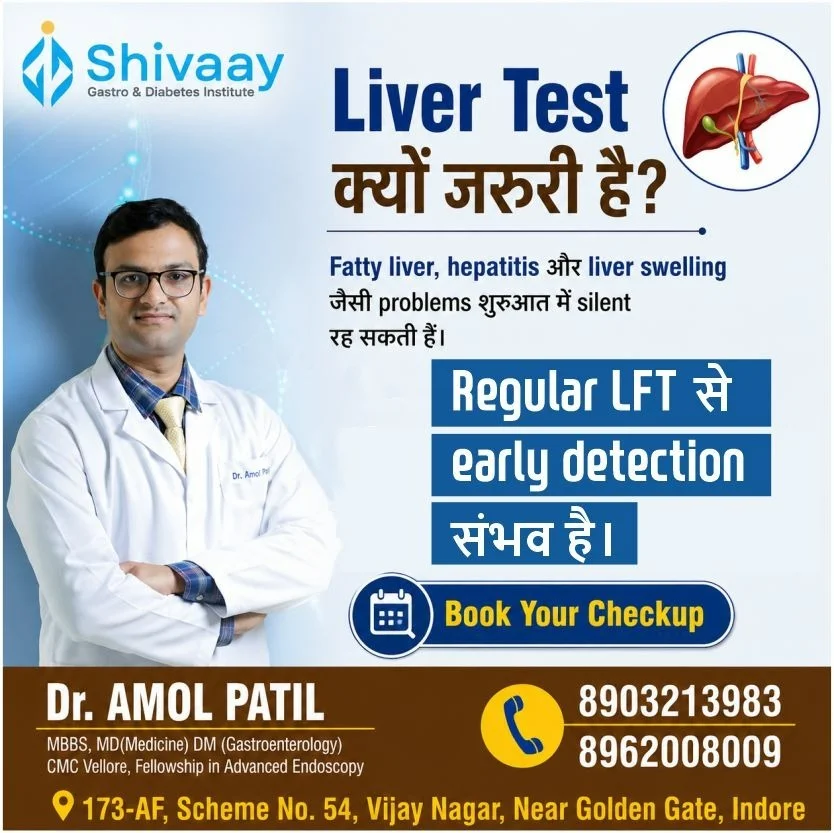
The liver performs hundreds of essential functions every day, from processing nutrients and producing important proteins to removing toxins and supporting digestion. Yet many liver conditions can develop quietly, with few noticeable symptoms during their early stages. This makes timely testing an important part of preventive healthcare.
If you are concerned about fatty liver, hepatitis, liver swelling, abnormal liver enzymes, or unexplained digestive symptoms, a Liver Function Test in Indore can provide valuable information about how well your liver is working. Shivaay Gastro & Diabetes Institute offers specialist consultation for people who need evaluation of liver-related symptoms, abnormal test reports, or ongoing liver health monitoring.
A Liver Function Test (LFT) is a group of blood tests used to measure different enzymes, proteins, and substances associated with liver health. These values help doctors understand whether the liver is functioning normally or showing signs of irritation, inflammation, bile-flow disturbance, or reduced functional capacity.
An LFT commonly measures parameters such as:
An abnormal result does not automatically mean severe liver disease. Your doctor interprets the complete pattern alongside symptoms, medical history, medicines, imaging findings, and other investigations.
People searching for a Liver Function Test in Indore may need testing for several reasons. Some are experiencing symptoms, while others have been advised to undergo routine monitoring due to diabetes, obesity, alcohol use, long-term medication, viral hepatitis risk, or previously abnormal liver reports.
Liver tests can be particularly useful because early liver disease may remain unnoticed. Detecting abnormalities at an earlier stage gives doctors an opportunity to identify the possible cause and recommend appropriate management.
Your liver has a remarkable ability to compensate when something is wrong. Because of this, significant changes can sometimes occur before obvious symptoms appear.
A liver test can help doctors:
However, an LFT is usually part of a broader assessment rather than a standalone diagnosis.
Fatty liver disease occurs when excess fat builds up inside liver cells. It is commonly associated with obesity, diabetes, high cholesterol, metabolic conditions, and other risk factors.
Many people with fatty liver have no noticeable symptoms. Some may experience fatigue or discomfort in the upper-right abdomen.
An LFT can help identify liver enzyme abnormalities, although normal liver enzymes do not completely rule out fatty liver. Ultrasound and additional evaluation may sometimes be required.
If you have diabetes, obesity, or abnormal lipid levels, discussing fatty liver screening in Indore with your physician may be worthwhile.
Hepatitis means inflammation of the liver and can develop due to viral infections, medicines, alcohol, autoimmune conditions, and other causes.
Possible symptoms include:
Liver enzymes may rise during hepatitis, but further tests are necessary to determine the cause.
An enlarged or inflamed liver may be discovered during examination or imaging. Causes vary considerably and may include infections, fatty liver, metabolic disorders, alcohol-related liver damage, or other conditions.
Liver specialist consultation in Indore can help determine which blood tests, scans, or further investigations are appropriate.
Your doctor may suggest an LFT test in Indore if you have symptoms or medical factors that could affect liver health.
Testing may be considered for individuals with:
Testing frequency should be based on medical advice rather than performing unnecessary investigations too frequently.
Many liver problems are initially silent, but certain symptoms deserve medical attention.
Consult a doctor if you notice:
These symptoms can occur with several conditions, so proper evaluation is essential.
ALT and AST are enzymes commonly included in a liver function test.
ALT is found mainly in the liver. Elevated ALT can occur when liver cells become irritated or damaged.
AST is present in the liver but is also found in muscles and other tissues. Therefore, an elevated AST value does not always indicate a liver-specific problem.
Doctors usually examine these values together rather than interpreting an isolated number.
Bilirubin is produced when red blood cells break down. The liver processes bilirubin so that it can eventually leave the body.
An increase in bilirubin can result in jaundice.
High bilirubin may occur because of:
Additional investigations may be required to identify the exact reason.
A common question is whether a Liver Function Test alone can confirm fatty liver.
The answer is no. Some people with fatty liver have elevated liver enzymes, while others have completely normal LFT values.
Doctors may use a combination of:
Therefore, if fatty liver is suspected, a normal blood report should not necessarily be considered the end of the evaluation.
There is an important relationship between Type 2 diabetes and metabolic liver disease. Insulin resistance can contribute to fat accumulation in the liver.
People with both diabetes and fatty liver may need attention to:
For patients with metabolic risk factors, comprehensive liver and diabetes care in Indore may help address multiple interconnected health concerns instead of treating individual laboratory values in isolation.
There is no universal detox drink or quick remedy that replaces medical care. Practical lifestyle measures are much more important.
If you are overweight, gradual and sustainable weight loss may benefit metabolic liver health.
Physical activity can improve metabolic health and insulin sensitivity.
Alcohol can contribute to liver injury, especially in people who already have liver disease.
Focus on vegetables, fruits in appropriate portions, whole grains, protein sources, and minimally processed foods.
Some herbal products and supplements can harm the liver. Discuss supplements with your doctor, particularly if you already have abnormal liver tests.
Good metabolic health plays an important role in reducing liver-related risk.
An abnormal result should be evaluated systematically rather than causing immediate panic.
Your doctor may:
The extent of investigation depends on which values are abnormal and how significantly they have changed.
You should consider gastroenterologist consultation in Indore when abnormal LFT values persist, symptoms suggest liver or digestive disease, or existing liver disease requires specialist management.
Specialist assessment can be useful for:
A specialist can interpret tests in the context of the complete clinical picture and determine whether further investigation is necessary.
Fasting requirements can vary depending on the other blood tests being performed at the same time. Follow the instructions provided by your doctor or diagnostic laboratory.
Not necessarily. Certain liver conditions, including fatty liver, may sometimes be present despite normal liver enzyme levels. Other investigations may be needed based on your risk factors and symptoms.
There is no fixed interval for everyone. Testing frequency depends on medical history, existing liver conditions, medication use, metabolic risk factors, and previous laboratory results.
Yes, liver enzymes may improve when the underlying cause is identified and appropriately managed. The treatment approach depends on why the enzymes are elevated.
Liver problems do not always produce early warning signs. Regular health assessment, especially for people with diabetes, obesity, fatty liver risk, hepatitis history, or previously abnormal liver enzymes, can support earlier identification and appropriate management.
If you require a Liver Function Test in Indore, interpretation of abnormal LFT results, or specialist advice for fatty liver, hepatitis, jaundice, or other liver concerns, Shivaay Gastro & Diabetes Institute can provide focused evaluation and guidance based on your individual health needs.
Do not ignore persistent symptoms or abnormal liver reports. Timely evaluation can help identify the cause and guide the next steps in your care.
Book your liver health consultation in Indore today and take an informed step toward protecting your long-term liver health.
| Tags: | #Liver Function Test in Indore |


