


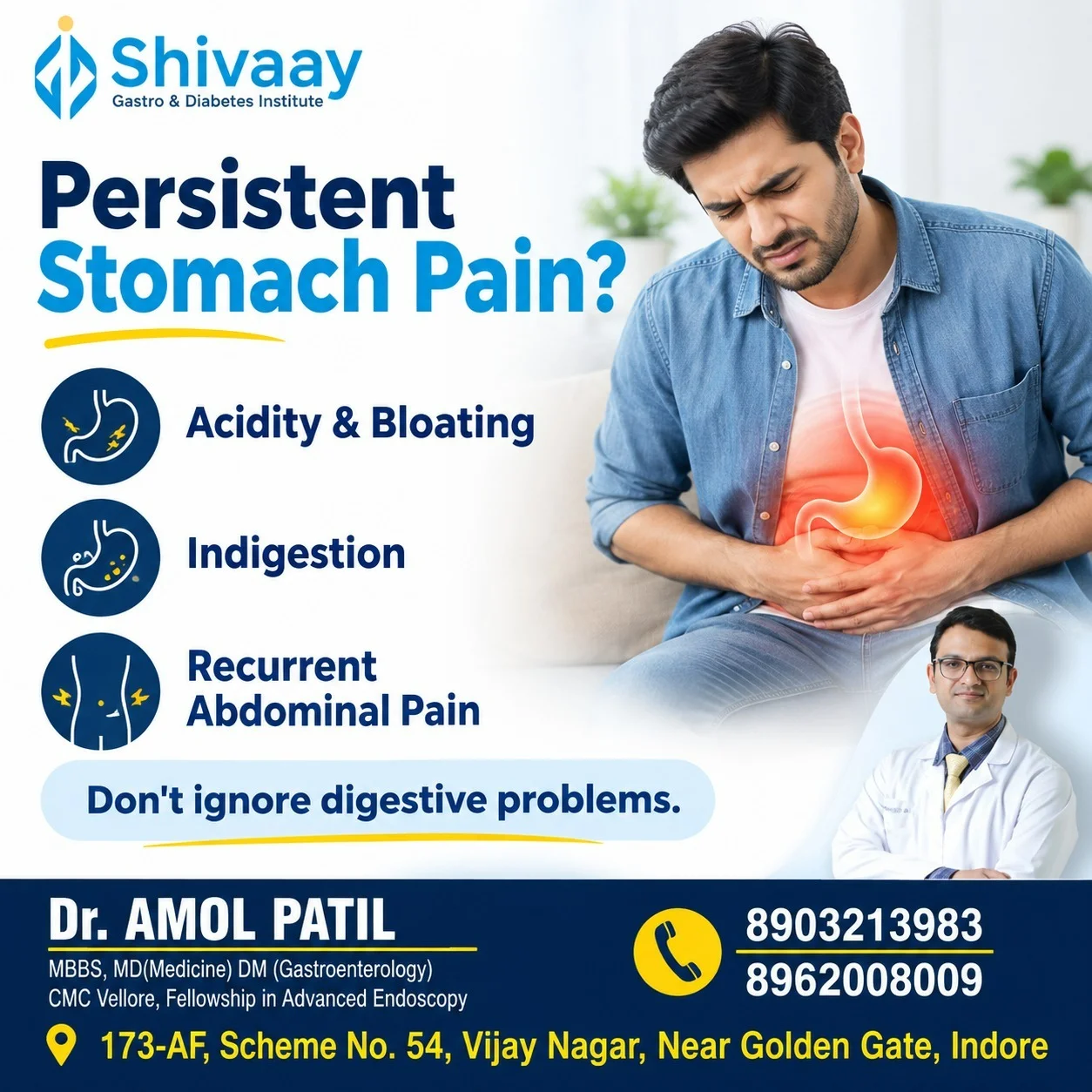
A familiar routine can develop around recurring stomach discomfort: skipping a meal, keeping an antacid nearby, or waiting for bloating to settle before leaving home. When this starts happening repeatedly, it is time to understand the cause. Stomach pain treatment in Indore starts with a careful account of the pain and an assessment of the symptoms that accompany it.
Pain that keeps returning may have several explanations. Its location, timing, connection with meals, and accompanying bowel changes can help guide assessment, but these clues do not establish a diagnosis by themselves.
For digestive concerns, you can consult Dr. Amol Patil at Shivaay Gastro & Diabetes Institute and discuss what has changed, what you have tried, and how the symptoms affect everyday life.
Seek emergency medical care for sudden, severe abdominal pain, vomiting blood or material resembling coffee grounds, substantial bleeding in stools, black tarry stools, or difficulty breathing.
Abdominal pain with an inability to pass stool or gas also requires urgent assessment. Do not wait for a routine clinic appointment when these warning signs occur.
Unexplained weight loss, difficulty swallowing, repeated vomiting, or pain that is worsening also needs prompt medical attention. Abdominal pain during pregnancy should be assessed promptly too. Mention these details clearly when seeking help.
For discomfort that is not severe but continues or repeatedly returns, arrange an assessment instead of relying indefinitely on temporary relief.
The words people use for digestive discomfort often overlap. Explaining the actual sensation can be more useful than choosing a label.
What people call “acidity” may involve heartburn or regurgitation. Acid reflux occurs when stomach contents move back into the food pipe, sometimes producing burning behind the breastbone or a sour taste.
Repeated symptoms should be discussed with a doctor, especially if they persist despite over-the-counter treatment.
Indigestion, also called dyspepsia, can involve upper abdominal pain or burning, becoming full too soon during a meal, or feeling uncomfortably full after eating. Nausea and belching may occur too.
Heartburn and indigestion can occur together, but they describe different symptom patterns.
Abdominal bloating is a sensation of fullness or swelling. The abdomen may or may not visibly enlarge.
Bloating can accompany several digestive conditions. Its frequency, relationship with food, and association with constipation, diarrhoea, or pain help frame the clinical discussion.
Recurring discomfort can be associated with reflux, peptic ulcers, medicine effects, constipation, or other conditions. Some abdominal pain comes from organs beyond the stomach, which is another reason location matters.
Two common causes of peptic ulcers are infection with H. pylori bacteria and the use of nonsteroidal anti-inflammatory medicines, including ibuprofen and aspirin.
Another possible explanation for persistent upper abdominal discomfort is functional dyspepsia, a disorder involving how the gut and brain interact. A clinician may consider it when an assessment does not identify another cause.
These conditions require different approaches. A brief improvement after an antacid does not tell you why the problem keeps returning.
A short symptom record can make a consultation more productive. You do not need medical terminology; straightforward observations are enough.
Record:
Include the names of medicines taken for unrelated conditions. Regular painkillers, iron supplements, and some other treatments can be relevant to digestive symptoms.
If you are seeking acidity and bloating treatment in Indore, explain which symptom troubles you most rather than reporting everything simply as “gas.”
Assessment usually starts with a discussion of symptoms, medical history, current medicines, and a physical examination.
Further testing depends on the findings. The same investigations are not necessary for every person.
For selected patients, the doctor may consider:
An upper GI endoscopy uses a flexible tube with a camera to examine the food pipe, stomach, and first part of the small intestine. When indicated, tissue samples can also be taken.
Ask what a proposed test is intended to clarify and whether any preparation is needed. Share previous reports so the doctor can decide what remains relevant.
Persistent abdominal pain does not have one standard treatment. Management may involve medicines, adjustments to existing prescriptions, dietary changes, or treatment of a specific condition.
If an H. pylori infection is identified and requires treatment, a doctor can prescribe the appropriate combination of medicines. Antibiotics should not be started simply because stomach pain has returned.
For functional dyspepsia, treatment may address several contributors, including digestive symptoms and the gut–brain interaction.
Before leaving the consultation, clarify how to take prescribed medicines, when to review progress, and what should prompt earlier contact. Follow-up is particularly useful when symptoms improve only partly or change.
Food-related triggers vary. One person may notice discomfort after fatty meals, while another finds a connection with fizzy drinks or caffeine. A symptom diary can help make these observations more specific.
Discuss possible changes with your doctor or dietitian instead of removing several food groups without a plan. An eating pattern should remain nutritionally adequate.
Mention meal timing, portion sizes, tea or coffee intake, fried snacks, and any long gaps between meals. These details provide context without assuming that one familiar food explains every symptom.
If stress seems to coincide with discomfort, bring that up as well. It can be part of the assessment alongside the physical symptoms.
When arranging a visit to a gastroenterologist in Indore, bring current prescriptions, earlier test results, and a clear account of the problem.
Residents looking for digestive care in Vijay Nagar, Indore, can also make the booking discussion more useful by mentioning warning symptoms, pregnancy, or recent changes in the pain.
Ask about appointment availability and any preparation required. Follow the specific instructions supplied when you book.
No. Reflux, indigestion, ulcers, constipation, and several other conditions may cause discomfort. The location and associated symptoms help guide assessment, but an examination may be needed to identify the cause.
No. Endoscopy is recommended when the clinical assessment supports it. Symptoms, medical history, warning signs, and previous investigations help the doctor decide which tests are appropriate.
Yes. Conditions such as functional dyspepsia involve the interaction between the gut and brain. Discussing stress can be useful, while new or worsening symptoms still need appropriate medical assessment.
Some can. Medicines such as ibuprofen and aspirin can increase the risk of peptic ulcers. Tell your doctor what you take, and seek advice before changing prescribed treatment.
Arrange an assessment when bloating repeatedly bothers you, changes suddenly, or occurs with abdominal pain, bowel changes, or weight loss. Severe pain or other emergency warning signs require urgent care.
Repeated discomfort can interfere with meals, work, and rest. A medical assessment can help identify the next step and guide a suitable treatment plan.
For stomach pain treatment in Indore, consult Dr. Amol Patil at Shivaay Gastro & Diabetes Institute to discuss persistent pain, indigestion, acidity, or bloating.
Visit 173-AF, Scheme No. 54, Vijay Nagar, near Golden Gate, Indore.
Contact Us Today to Book Your Gastroenterology Consultation.
| Tags: | #Stomach pain treatment in Indore |


