


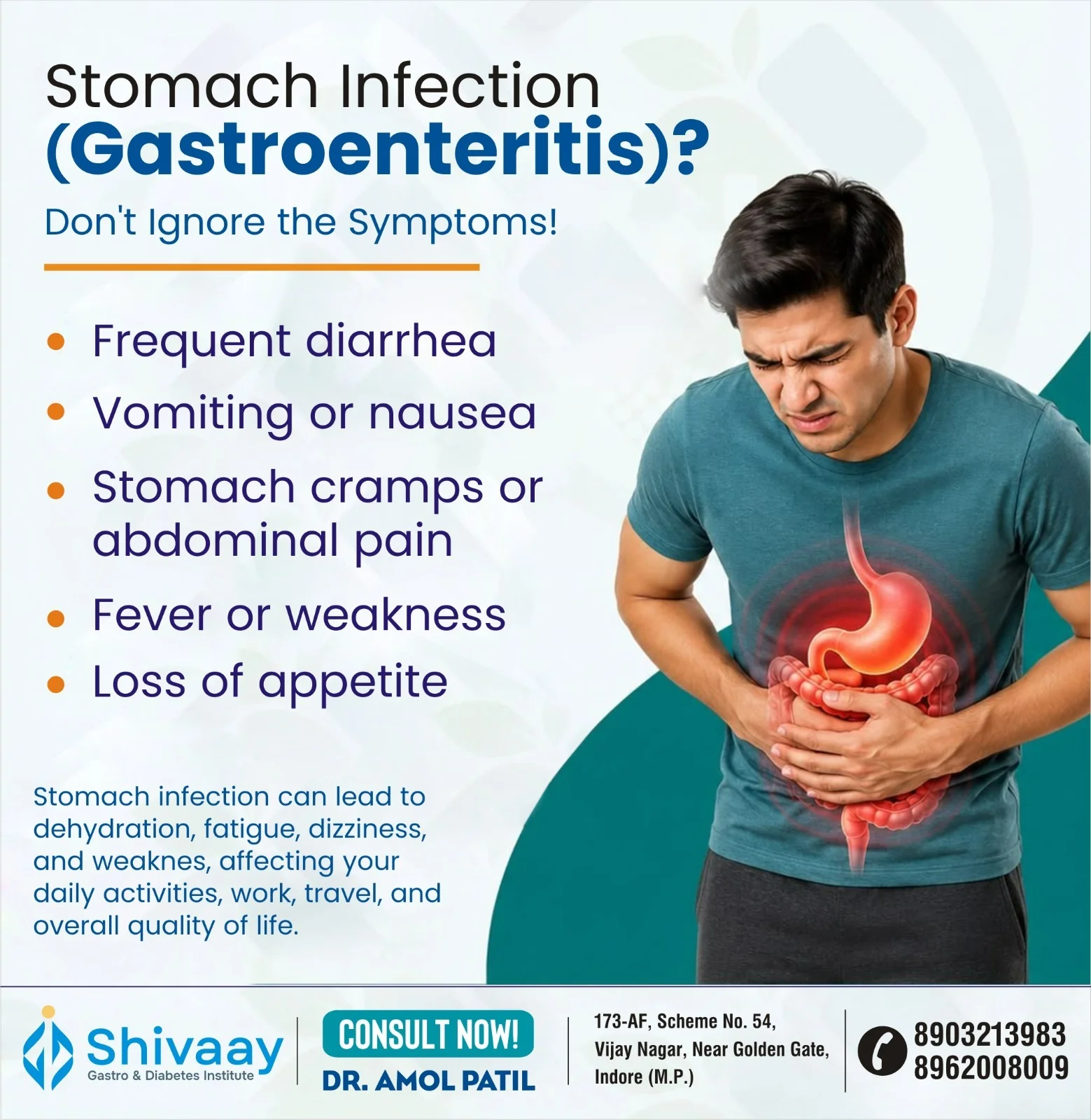
Stomach Infection (Gastroenteritis) Treatment in Indore – Symptoms, Causes & When to See a Gastro Specialist
A sudden episode of diarrhea, vomiting, nausea, stomach cramps, weakness, or loss of appetite can disrupt your entire routine. These symptoms are commonly associated with gastroenteritis, often called a stomach infection. While many cases improve with rest and adequate hydration, some infections can become serious because repeated vomiting and diarrhea may lead to dehydration and electrolyte loss.
If symptoms are persistent, severe, or associated with dehydration, timely evaluation by a gastro specialist in Indore can help determine whether the problem is likely viral, food-related, bacterial, parasitic, or due to another digestive condition.
Dr. Amol Patil provides consultation for people experiencing stomach infection symptoms, diarrhea, vomiting, abdominal discomfort, weakness, and other gastrointestinal concerns in Indore. Proper assessment helps decide whether supportive care is sufficient or whether additional testing and treatment are required.
Gastroenteritis refers to inflammation affecting the stomach and intestines. Viral gastroenteritis is one common cause and may produce watery diarrhea, nausea, vomiting, abdominal cramps, and sometimes fever.
People may casually call it “stomach flu,” but it is not the same as influenza, which mainly affects the respiratory system.
A stomach infection can occur due to different causes, including:
Viral infections
Contaminated food or water
Certain bacterial infections
Parasitic infections
Food poisoning
Because several digestive illnesses can cause similar symptoms, prolonged or severe symptoms should be professionally evaluated.
Symptoms may appear suddenly and vary from mild to severe.
Common signs include:
Frequent diarrhea
Vomiting or nausea
Stomach cramps
Abdominal pain
Fever
Weakness
Loss of appetite
Fatigue
Headache in some cases
Dehydration
Norovirus, for example, commonly causes acute vomiting and non-bloody diarrhea, along with nausea and abdominal cramps; some people also develop a low-grade fever.
The exact symptom pattern depends on the cause of the infection.
Many mild stomach infections settle on their own, but frequent diarrhea and vomiting can rapidly reduce body fluids.
Dehydration is one of the most important complications of gastroenteritis. The body loses both water and electrolytes during repeated diarrhea and vomiting.
Signs of dehydration may include:
Dry mouth
Increased thirst
Reduced urination
Dark urine
Dizziness when standing
Weakness
Unusual sleepiness
Feeling very tired
The CDC lists decreased urination, dry mouth and throat, and dizziness on standing among important signs of dehydration.
Anyone showing significant signs of dehydration should seek medical attention promptly.
Viruses are a common cause of acute gastroenteritis.
Examples include:
Norovirus
Rotavirus
Other gastrointestinal viruses
Norovirus can spread easily and typically causes sudden vomiting and diarrhea.
Food or water contaminated with harmful organisms can lead to diarrhea, vomiting, abdominal pain, and fever.
Food poisoning can also cause acute gastrointestinal symptoms, and replacing lost fluids is an important part of care in many cases.
Certain bacterial infections may cause more severe symptoms such as high fever, persistent diarrhea, or blood in stool.
The specific treatment depends on the organism and severity, so antibiotics should not be started casually.
Parasites such as Giardia may cause diarrhea, gas, stomach cramps, nausea, and dehydration.
Some parasitic infections can continue longer than typical viral gastroenteritis and may require specific treatment.
Many stomach infections spread through contaminated food, water, surfaces, or close contact with an infected person.
Viruses such as norovirus can spread very easily.
Basic prevention measures include:
Wash hands properly
Use safe drinking water
Wash fruits and vegetables
Avoid stale or improperly stored food
Keep kitchen surfaces clean
Avoid sharing contaminated utensils
Maintain food hygiene during travel
Proper hygiene becomes especially important when someone in the household already has vomiting or diarrhea.
There is no single treatment for every case of gastroenteritis.
Professional stomach infection treatment in Indore depends on:
Cause of infection
Severity of symptoms
Duration
Age
Hydration status
Medical history
Presence of blood in stool
Fever
Other associated symptoms
For many cases of viral gastroenteritis, replacing lost fluids and electrolytes is the main treatment.
However, treatment may be different if the illness is bacterial, parasitic, severe, or due to another digestive condition.
Hydration is one of the most important parts of recovery when diarrhea or vomiting is present.
The body can lose:
Water
Sodium
Potassium
Other electrolytes
Replacing lost fluids helps reduce the risk of dehydration.
NIDDK recommends drinking enough liquids and replacing electrolytes during viral gastroenteritis.
Depending on the situation, useful fluids may include:
Water
Oral rehydration solution
Suitable electrolyte-containing fluids
Light fluids tolerated by the patient
If vomiting prevents you from keeping fluids down, medical attention may be required.
A common misconception is that patients should completely stop eating for long periods.
According to NIDDK, once appetite returns, most people can generally return to their normal diet even if some diarrhea continues.
During recovery, many people find it easier to begin with simple foods such as:
Rice
Khichdi
Toast
Banana
Curd if tolerated
Light dal
Simple home-cooked food
Avoid heavy, oily, or very spicy meals if they worsen your symptoms.
The most important priority during active vomiting or diarrhea remains adequate fluid replacement.
Not every stomach infection needs antibiotics.
Viral gastroenteritis does not improve with antibiotics because antibiotics work against bacteria, not viruses.
Taking antibiotics without proper diagnosis can:
Cause unnecessary side effects
Disturb normal gut bacteria
Contribute to antibiotic resistance
Delay correct diagnosis
A doctor should determine whether there is a reason to suspect a bacterial infection before antibiotic treatment is considered.
You should consider consulting a gastroenterologist in Indore when symptoms are severe, prolonged, frequently recurring, or associated with warning signs.
Medical evaluation is especially important if you experience:
Persistent vomiting
Frequent diarrhea
Severe abdominal pain
Blood in stool
High fever
Significant weakness
Reduced urination
Dizziness
Symptoms of dehydration
Inability to drink fluids
Symptoms lasting longer than expected
NIDDK recommends immediate medical attention for signs or symptoms of dehydration because severe dehydration may require hospital treatment.
Many uncomplicated cases can be assessed through medical history and physical examination.
A doctor may ask about:
Number of loose stools
Vomiting frequency
Recent food intake
Travel
Fever
Blood in stool
Duration of symptoms
Fluid intake
Other family members with similar symptoms
During examination, the doctor may look for dehydration, abdominal tenderness, fever, pulse changes, and blood pressure changes.
Further tests may be recommended in selected cases.
Testing is not necessary for every short episode of diarrhea.
A doctor may consider additional investigations when:
Symptoms are severe
Diarrhea persists
Blood appears in stool
High fever is present
Infection is recurrent
Dehydration is significant
Another disease is suspected
Possible investigations may include:
Stool examination
Stool culture
Blood tests
Electrolyte tests
Other tests based on symptoms
The choice depends on the patient's clinical condition.
Older adults can become dehydrated more quickly because they may have reduced thirst sensation, other medical problems, or medications that affect fluid balance.
Special attention should be given to:
Reduced urination
Weakness
Dizziness
Confusion
Dry mouth
Difficulty drinking fluids
The CDC notes that dehydration from gastroenteritis can be especially concerning in older adults and people with other illnesses.
Yes.
Repeated vomiting and diarrhea can lead to loss of fluids and electrolytes, which may result in:
Fatigue
Weakness
Dizziness
Low energy
Difficulty performing daily activities
These symptoms may improve as hydration and recovery improve, but significant dizziness or weakness should not be ignored.
Duration depends on the cause.
Norovirus illness, for example, often improves within approximately 1–3 days in otherwise healthy individuals.
Other infections may last longer.
If symptoms continue beyond the expected period, become more severe, or repeatedly return, further medical evaluation may be needed.
Simple hygiene practices can lower infection risk.
Wash hands before eating and after using the toilet.
Use a trusted drinking-water source.
Avoid food that has been left at unsafe temperatures for extended periods.
Clean fruits and vegetables before eating.
Clean areas contaminated by vomit or diarrhea carefully.
If possible, avoid preparing meals for others while actively experiencing vomiting or diarrhea.
People searching for stomach infection treatment near me in Indore often want quick evaluation because symptoms can interfere with work, travel, sleep, and normal meals.
Patients from Vijay Nagar, Scheme No. 54, Scheme No. 78, Palasia, Nipania, Bengali Square, Dewas Naka, Super Corridor, and other areas of Indore can consider a gastroenterology consultation when symptoms are persistent or concerning.
Two patients with similar diarrhea and abdominal pain may have entirely different causes.
One may have viral gastroenteritis, another may have food poisoning, while someone else may have a bacterial or parasitic infection.
That is why treatment should be based on:
Clinical history
Severity
Duration
Hydration status
Warning signs
Investigation results when needed
Dr. Amol Patil provides consultation for patients looking for stomach infection treatment in Indore, including evaluation of diarrhea, vomiting, abdominal cramps, nausea, dehydration, and other gastrointestinal symptoms.
Not exactly. Gastroenteritis describes inflammation of the stomach and intestines and may result from viruses or other infections. Food poisoning refers to illness caused by contaminated food and can also produce diarrhea, vomiting, and abdominal pain.
Dehydration is one of the most important risks because the body loses both fluids and electrolytes.
Replacing lost fluids and electrolytes is an important part of managing diarrhea and vomiting. Oral rehydration solutions can be useful, particularly when fluid losses are significant.
Seek medical attention for severe dehydration, persistent vomiting, blood in stool, significant abdominal pain, high fever, or inability to maintain fluid intake.
Frequent diarrhea, vomiting, stomach cramps, fever, and weakness should not be ignored when symptoms are severe or continuing. Adequate hydration is essential, but some patients also need medical evaluation to determine the cause of their gastroenteritis and rule out complications.
If you are looking for professional Stomach Infection (Gastroenteritis) Treatment in Indore, schedule a gastroenterology consultation for proper assessment and personalized care.
Contact Us today to get expert guidance for stomach infection, diarrhea, vomiting, abdominal pain, and related digestive concerns in Indore.
| Tags: | #Stomach Infection Gastroenteritis Treatment in Indore |


