


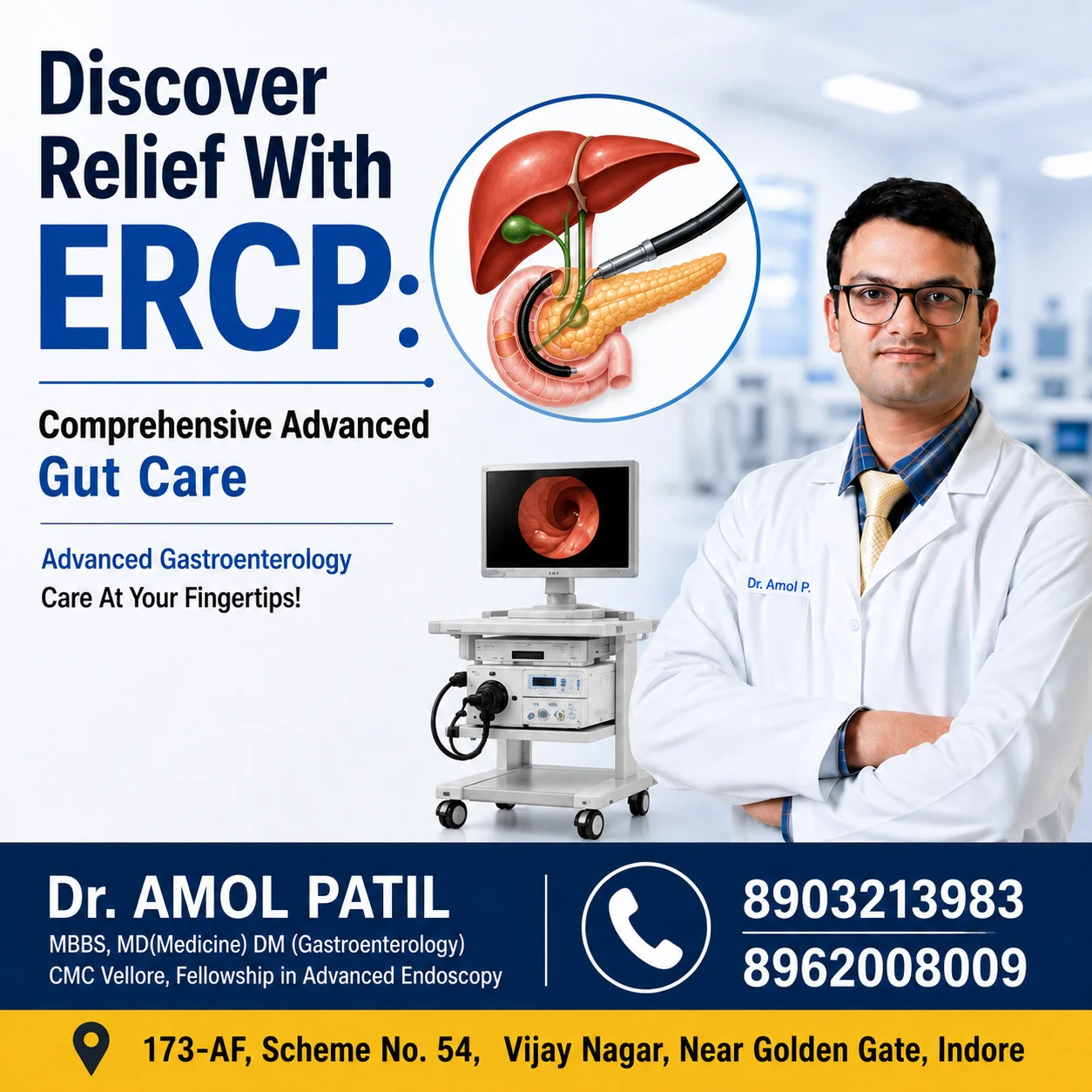
ERCP Specialist in Indore – Advanced Diagnosis and Treatment for Bile Duct and Pancreatic Disorders
Problems involving the bile ducts, gallbladder, liver, or pancreas may sometimes require more than routine medicines or standard imaging. When a stone blocks the bile duct, jaundice develops because of obstruction, or narrowing occurs within the biliary system, doctors may recommend ERCP in Indore as part of diagnosis and treatment.
ERCP, or Endoscopic Retrograde Cholangiopancreatography, is an advanced endoscopic procedure used mainly to treat selected conditions affecting the bile ducts and pancreatic ducts. Patients looking for an experienced ERCP Specialist in Indore can consult Dr. Amol Patil for evaluation of symptoms such as obstructive jaundice, bile duct stones, recurrent abdominal pain, or suspected biliary obstruction. At Shivaay Gastro & Diabetes Institute, assessment is planned according to the patient's symptoms, reports, medical history, and clinical requirements.
What Is ERCP?
ERCP treatment combines endoscopy with X-ray imaging to access the bile ducts and pancreatic ducts.
During the procedure, a flexible endoscope is passed through the mouth and guided through the stomach into the first part of the small intestine. The opening through which bile and pancreatic juices drain is then identified.
A small catheter may be passed into the duct, and contrast material can be introduced so that the biliary or pancreatic system becomes visible under imaging.
If a treatable abnormality is identified, therapeutic steps may sometimes be performed during the same procedure.
This ability to diagnose selected problems and provide immediate intervention makes ERCP particularly valuable in specific gastrointestinal conditions.
When Is ERCP Recommended?
Not every patient with abdominal pain, gallstones, or jaundice requires ERCP.
A gastroenterologist may consider ERCP in Indore when there is evidence or strong suspicion of a problem involving the bile ducts or pancreatic ducts.
Common situations may include:
Common Bile Duct Stones
Gallstones can occasionally leave the gallbladder and become lodged in the common bile duct. This condition is known as choledocholithiasis.
Symptoms may include:
An ERCP for bile duct stones in Indore may allow the specialist to access the duct and remove the obstructing stone when appropriate.
Obstructive Jaundice
Jaundice occurs when bilirubin builds up in the bloodstream, causing yellowing of the skin and eyes.
Obstructive jaundice can result from several causes, including:
ERCP may be used to relieve obstruction by removing a stone or placing a stent, depending on the cause.
Bile Duct Narrowing
A narrowing or bile duct stricture can interfere with normal bile flow.
The narrowing may occur because of inflammation, previous surgery, injury, or other biliary conditions. In selected cases, ERCP may be used to examine the narrowing, obtain tissue samples, or place a stent to improve drainage.
Bile Leak
A bile leak can occasionally occur after gallbladder surgery, trauma, or certain liver procedures.
ERCP may be considered to reduce pressure within the biliary system and assist healing, often through sphincterotomy or temporary stent placement when clinically suitable.
Selected Pancreatic Duct Problems
Certain pancreatic duct disorders may also require ERCP.
These may involve:
The exact procedure depends entirely on the underlying condition.
ERCP and Gallstones: What Is the Connection?
Gallstones usually form inside the gallbladder. Many people may have gallstones without experiencing symptoms.
However, if a stone moves into the common bile duct, it can block the normal flow of bile.
This can potentially lead to:
When imaging suggests a retained common bile duct stone, a gastroenterologist may advise ERCP stone removal in Indore.
It is important to understand that ERCP generally treats stones within the bile duct rather than stones that remain only inside the gallbladder.
Symptoms That May Need Gastroenterology Evaluation
Certain symptoms should prompt medical evaluation, particularly when they are persistent or severe.
These include:
These symptoms do not automatically mean that ERCP is needed. They indicate that further assessment may be necessary.
How Is a Patient Evaluated Before ERCP?
Before recommending ERCP treatment in Indore, a gastroenterologist may evaluate the patient's clinical condition and existing reports.
Investigations may include:
MRCP is a non-invasive MRI-based technique that can provide detailed images of the bile ducts and pancreatic ducts.
In many cases, imaging helps determine whether an obstruction exists before therapeutic ERCP is planned.
What Happens During an ERCP Procedure?
Patients generally receive sedation or anesthesia according to the medical team's assessment.
A flexible endoscope is carefully passed through the mouth and advanced to the duodenum. The doctor then locates the papilla, which is the opening where the bile duct and pancreatic duct drain.
Depending on the medical requirement, procedures may include:
Sphincterotomy
A small opening may be made to facilitate stone extraction or drainage.
Stone Extraction
Special balloons or baskets can be used to remove suitable bile duct stones.
Stent Placement
A plastic or metal stent may be placed in a narrowed or obstructed duct to maintain drainage.
Sampling
Brushings or biopsies may be collected from selected strictures when further examination is required.
The exact intervention varies from patient to patient.
ERCP for Obstructive Jaundice in Indore
One of the major therapeutic roles of ERCP is managing selected causes of obstructive jaundice.
If the blockage is caused by a bile duct stone, removal may restore bile flow. When the obstruction results from narrowing or another structural problem, a stent may sometimes be placed to bypass the blockage.
People searching for obstructive jaundice treatment in Indore should first undergo appropriate evaluation because jaundice can develop from many liver, blood, gallbladder, and pancreatic conditions.
ERCP is useful only when there is a relevant obstruction or duct-related indication.
ERCP for Bile Duct Stenting
A bile duct stent is a small tube placed to keep a narrowed or obstructed duct open.
Stenting may sometimes be advised in conditions involving:
Some stents require later removal or replacement, so follow-up after the procedure is important.
Patients should clearly understand the type of stent placed and any recommended follow-up schedule.
Is ERCP the Same as Endoscopy?
No. Although both procedures use a flexible endoscope, they have different purposes.
A routine upper GI endoscopy examines structures such as the:
ERCP goes further by accessing the opening of the bile and pancreatic ducts and using specialized instruments and X-ray guidance.
For this reason, advanced therapeutic endoscopy in Indore requires specific expertise, equipment, and clinical planning.
Potential Risks of ERCP
ERCP can be highly useful when medically indicated, but it is an invasive procedure and therefore carries potential risks.
Possible complications include:
The individual risk varies according to the patient's health, anatomy, reason for ERCP, and the intervention required.
The gastroenterologist should explain the expected benefits, alternatives, and potential risks before the procedure.
Why Specialist Evaluation Matters
Symptoms such as jaundice and abdominal pain can arise from many different conditions.
For example, jaundice may be related to:
Similarly, abdominal pain may come from the stomach, gallbladder, liver, pancreas, intestine, or other organs.
Consulting a gastroenterologist in Indore helps ensure that investigations are selected according to the likely cause rather than proceeding directly to an invasive procedure.
Preparing for ERCP
Patients should follow the specific instructions provided by their treating team.
Common preparation considerations may include:
Patients should not stop prescription medicines on their own. Medication adjustments should be made only according to medical advice.
Recovery After ERCP
Following the procedure, patients are monitored until they recover adequately from sedation.
Mild temporary throat discomfort or bloating may occur.
Medical advice should be sought promptly if significant symptoms develop after discharge, particularly:
Post-procedure instructions vary depending on whether stone removal, sphincterotomy, stenting, or another intervention was performed.
Frequently Asked Questions
1. Is ERCP a surgery?
ERCP is an advanced endoscopic procedure rather than conventional open surgery. Instruments are introduced through a flexible endoscope passed through the mouth, so external surgical incisions are generally not required for the ERCP itself.
2. Can ERCP remove a bile duct stone?
Yes, suitable common bile duct stones can often be removed during therapeutic ERCP using specialized extraction techniques. The feasibility depends on factors such as stone size, number, location, and anatomy.
3. Does every patient with gallstones need ERCP?
No. Gallstones confined to the gallbladder generally do not automatically require ERCP. It is mainly considered when a stone is suspected or confirmed within the bile duct or when another therapeutic duct-related indication exists.
4. Is hospitalization required after ERCP?
This depends on the patient's health, reason for the procedure, complexity of treatment, sedation or anesthesia, and recovery. Some patients may be discharged after observation, while others may require hospital monitoring.
Consult an ERCP Specialist in Indore
Persistent jaundice, suspected common bile duct stones, biliary obstruction, recurrent pancreatitis, or abnormal liver tests should be evaluated carefully rather than ignored. Modern gastroenterology offers imaging and therapeutic endoscopic options that can help identify the underlying problem and, in selected cases, treat it without conventional open surgery.
Dr. Amol Patil provides consultation for gastroenterology, liver, pancreatic, biliary, and advanced endoscopy-related conditions at Shivaay Gastro & Diabetes Institute. Patients looking for an experienced ERCP Specialist in Indore, bile duct stone treatment in Indore, or advanced gastrointestinal care can schedule an assessment to understand the appropriate next step.
Contact Us Today to Book an Appointment for Advanced ERCP and Gastroenterology Care in Indore
| Tags: | #ERCP Specialist in Indore |


