


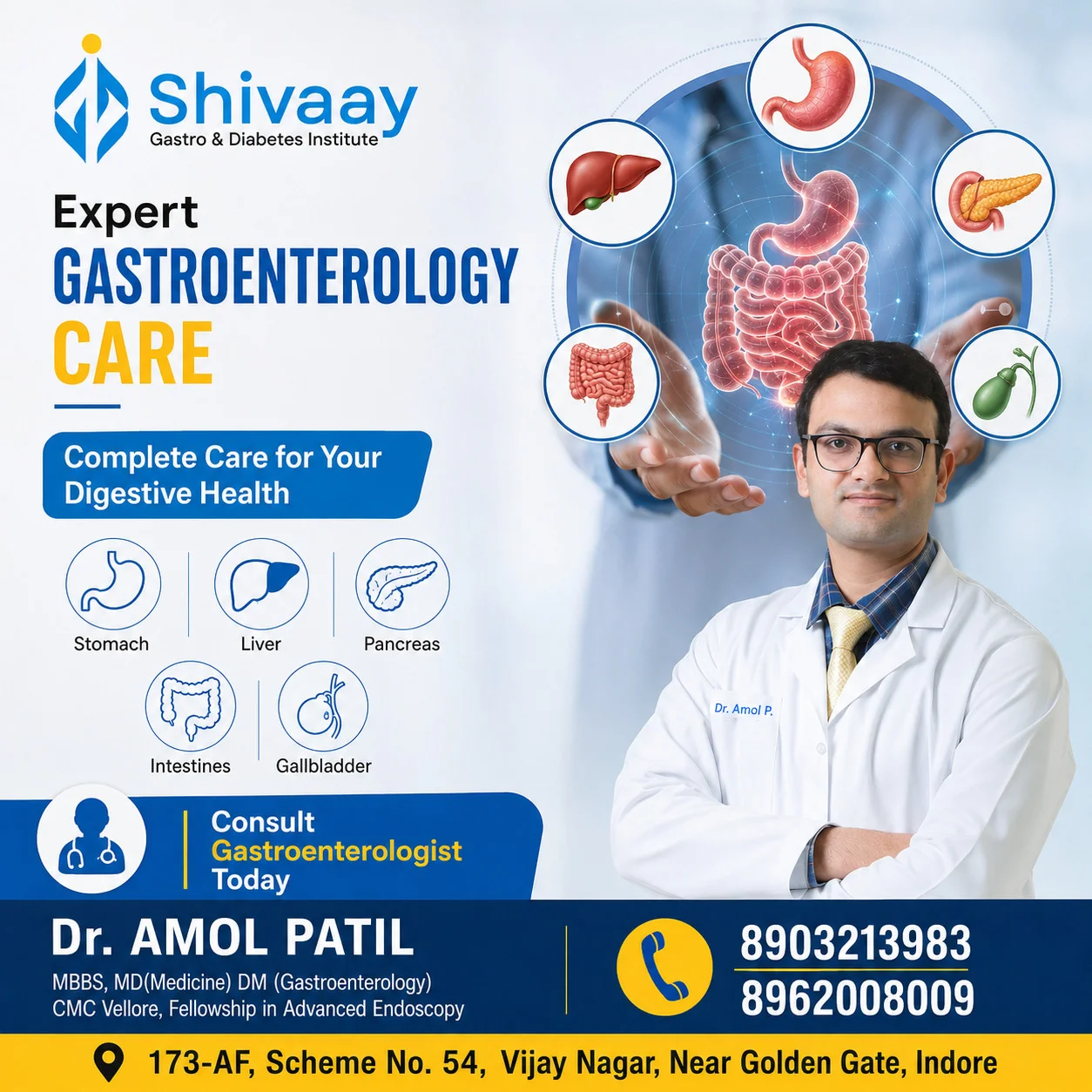
If you are looking for the best gastroenterologist in Indore, consider consulting a specialist when digestive symptoms such as persistent acidity, abdominal pain, bloating, constipation, diarrhoea, swallowing difficulty, nausea or changes in bowel habits keep returning. Dr. Amol Patil provides evaluation and medical guidance for gastrointestinal, liver, gallbladder and digestive health concerns.
Discuss how long your digestive symptoms have been present.
Carry previous blood tests, scans, endoscopy reports and prescriptions.
Mention unexplained weight loss, appetite changes or bowel changes.
Seek timely medical evaluation when symptoms become persistent or recurrent.
Get urgent medical care for vomiting blood, black stools, fainting or severe abdominal pain.
Occasional indigestion, acidity or bloating can happen after changes in food, sleep or daily routine. However, symptoms that continue for several days, occur repeatedly or interfere with eating, sleep and work may require medical evaluation.
People searching for the best gastroenterologist in Indore commonly need help understanding symptoms affecting the stomach, food pipe, intestines, liver, pancreas or gallbladder.
Dr. Amol Patil provides consultation for patients experiencing gastrointestinal and digestive health concerns in Indore. A proper consultation focuses not only on the symptom itself but also on its duration, pattern, associated complaints, previous treatments and medical history.
This patient-education article has been prepared in the context of gastroenterology and liver care for Dr. Amol Patil, Indore. It provides general information and should not replace an individual medical consultation.
A gastroenterologist is a doctor who specialises in diagnosing and managing diseases affecting the digestive system.
The gastrointestinal system includes:
Food pipe or oesophagus
Stomach
Small intestine
Large intestine or colon
Rectum
Liver
Gallbladder
Bile ducts
Pancreas
A gastroenterologist in Indore may evaluate concerns ranging from frequent heartburn and constipation to liver abnormalities, swallowing problems and persistent changes in bowel habits.
The commonly searched term “gastrologist” generally refers to a gastroenterologist.
Digestive symptoms can have many possible causes. Their significance depends on how severe they are, how long they last and whether other warning signs are present.
Frequent burning in the chest or upper abdomen may be associated with acid reflux or GERD.
GERD, or gastroesophageal reflux disease, occurs when stomach contents repeatedly move backwards into the food pipe. Medical evaluation may be appropriate when reflux is frequent or affects sleep, eating or daily activities.
Abdominal pain may arise from the stomach, bowel, gallbladder, pancreas or other abdominal organs.
The location, duration and relationship of pain with meals or bowel movements can help a doctor decide what evaluation may be needed.
Bloating describes a feeling of fullness, tightness or swelling in the abdomen.
It can sometimes occur after certain foods or overeating, but frequent bloating accompanied by bowel changes, pain, vomiting or unexplained weight loss should be medically evaluated.
Constipation may involve:
Hard or dry stools
Difficulty passing stools
Less frequent bowel movements
Feeling that the bowel has not emptied completely
Persistent constipation deserves evaluation, particularly when it appears suddenly or occurs with bleeding, abdominal pain or weight loss.
Diarrhoea may occur due to infection, food intolerance, inflammation and several other gastrointestinal conditions.
Prolonged diarrhoea can also increase the risk of dehydration.
Occasional nausea can have several causes. Persistent vomiting, inability to tolerate fluids or vomiting accompanied by severe abdominal pain requires medical assessment.
Difficulty swallowing food or liquids should not be repeatedly ignored. A gastroenterologist may recommend further evaluation depending on the patient's symptoms and medical history.
Persistent changes in stool frequency, consistency, colour or bowel pattern may need evaluation, particularly when accompanied by bleeding, pain or unexplained weight loss.
Some gastrointestinal symptoms require prompt or urgent medical attention.
Seek urgent medical care if you experience:
Vomiting blood
Black or tar-like stools
Severe or rapidly worsening abdominal pain
Persistent jaundice
Fainting or severe weakness
Significant dehydration
Persistent vomiting with inability to keep fluids down
These symptoms should not be managed solely through home remedies or online advice.
People consulting the best gastroenterologist in Indore may be evaluated for several digestive and liver-related conditions depending on their symptoms.
GERD is frequent acid reflux in which stomach contents move into the oesophagus. Common complaints can include heartburn, sour taste, regurgitation and discomfort after eating.
Gastritis refers to inflammation of the stomach lining. Symptoms may include upper abdominal discomfort, nausea or a feeling of fullness, although symptoms alone cannot confirm the diagnosis.
IBS, or irritable bowel syndrome, is a digestive condition that may involve abdominal discomfort, bloating, constipation, diarrhoea or alternating bowel patterns.
Diagnosis generally requires clinical assessment because several conditions can produce similar symptoms.
IBD mainly includes Crohn's disease and ulcerative colitis. These are inflammatory digestive conditions and are different from IBS.
Persistent diarrhoea, bleeding, weight loss or abdominal pain may require further evaluation.
Fat accumulation in the liver is often detected on ultrasound or during investigations performed for another reason.
A liver specialist may evaluate liver function, metabolic risk factors and other possible causes before advising further management.
Gallstones and other gallbladder conditions can sometimes cause upper abdominal pain, nausea or discomfort, particularly after meals.
However, similar symptoms can occur due to other digestive conditions, so medical assessment is important.
The pancreas plays an important role in digestion and blood glucose regulation. Persistent upper abdominal symptoms may occasionally require pancreatic evaluation based on clinical findings.
Digestive symptoms do not always have a single cause. Factors that may contribute include:
Irregular meals
Frequent overeating
Low dietary fibre intake
Inadequate fluid intake
Sedentary lifestyle
Obesity or excess body weight
Smoking
Alcohol consumption
Certain infections
Stress and disturbed sleep
Family history of gastrointestinal disease
Existing medical conditions
Certain medicines
Medicines should not be started, stopped or changed without consulting the treating doctor.
Consider consulting a gastroenterologist when symptoms are persistent, recurrent, unexplained or affecting your normal activities.
Medical evaluation may be particularly useful for:
Acidity occurring repeatedly
Persistent abdominal pain
Frequent bloating
Long-standing constipation
Recurrent diarrhoea
Blood in stool
Difficulty swallowing
Persistent nausea or vomiting
Unexplained appetite loss
Unintentional weight loss
Abnormal liver tests
Jaundice
Suspected gallbladder problems
Continuing digestive symptoms despite previous treatment
Patients searching online for a gastro doctor near me should consider more than convenience alone. Proper clinical evaluation, clear communication and appropriate investigation are important parts of digestive healthcare.
A gastroenterologist usually begins with a detailed discussion about the symptoms.
You may be asked about:
When symptoms started
Whether symptoms occur after particular foods
Stool frequency and consistency
Recent weight changes
Appetite
Previous medical conditions
Current medicines
Family history
Alcohol use where clinically relevant
Previous scans, blood tests or endoscopy
Blood investigations may sometimes be advised to assess anaemia, inflammation, infection, liver function or other health indicators depending on the clinical situation.
LFT, or liver function testing, refers to a group of blood tests used to assess certain liver-related enzymes, proteins and bilirubin levels.
An abnormal LFT does not automatically identify one specific liver disease. Results need to be interpreted alongside symptoms, medical history and other investigations.
Ultrasound or other imaging may be recommended when evaluation of the liver, gallbladder, pancreas or abdominal organs is required.
An endoscopy allows a doctor to examine the upper digestive tract using a thin flexible instrument with a camera.
It may be recommended for selected patients depending on symptoms such as persistent swallowing difficulty, gastrointestinal bleeding, recurrent upper abdominal symptoms or other clinical concerns.
A colonoscopy allows examination of the large intestine or colon.
It may be considered when clinically indicated for symptoms such as persistent bowel changes, gastrointestinal bleeding or other concerns requiring direct examination of the colon.
Not every patient with digestive symptoms requires endoscopy or colonoscopy. The need for testing depends on age, symptoms, medical history and clinical evaluation.
Treatment for digestive problems varies according to the underlying diagnosis.
A gastroenterologist may focus on:
Identifying the likely cause of symptoms
Reviewing previous reports and treatments
Advising relevant investigations where required
Discussing dietary and lifestyle measures
Managing the diagnosed digestive condition
Monitoring response to treatment
Planning follow-up when necessary
There is no single treatment plan suitable for every patient experiencing acidity, bloating, constipation or abdominal pain.
Results and recovery can vary depending on the condition, its severity, associated health problems and individual response.
General lifestyle habits may support digestive health, although they should not replace medical evaluation when persistent symptoms are present.
Long gaps between meals followed by overeating can worsen digestive discomfort in some people.
Fruits, vegetables, whole grains and other fibre-containing foods can support bowel health. However, individual tolerance varies, particularly in people with certain gastrointestinal conditions.
Maintaining hydration can help normal body and bowel function.
Eating very quickly may contribute to swallowed air, fullness or discomfort in some individuals.
Regular physical activity can support general metabolic and digestive health.
If particular foods repeatedly trigger symptoms, note the pattern and discuss it during consultation rather than following highly restrictive diets without professional guidance.
Digestive and liver conditions should not be treated using unverified detox products or cure claims.
Temporary relief does not necessarily identify or treat the underlying condition.
Acidity, pain, diarrhoea or constipation that continues or repeatedly returns deserves appropriate evaluation.
Different gastrointestinal disorders can produce similar symptoms.
Removing multiple food groups without medical or nutritional guidance can make balanced nutrition more difficult.
Bleeding, black stool, persistent jaundice, severe abdominal pain, fainting and dehydration require prompt medical attention.
To make your appointment more useful, consider discussing:
How long have my symptoms been present?
What could be causing these symptoms?
Do my previous reports provide useful information?
Are additional blood tests or scans required?
Is endoscopy or colonoscopy clinically necessary?
Could any of my current medicines affect digestion?
Are there foods or habits I should temporarily avoid?
When should I return for follow-up?
Which warning symptoms require urgent medical care?
Bring previous prescriptions, investigations, scans and endoscopy reports whenever available.
Patients looking for the best gastroenterologist in Indore often want a doctor who can assess digestive symptoms carefully and explain the next steps clearly.
Dr. Amol Patil provides consultation and medical guidance for conditions affecting the stomach, intestines, liver, gallbladder, pancreas and digestive system.
The consultation approach may include reviewing symptoms, medical history and available reports before determining whether additional testing or further management is appropriate.
Patients searching for a gastroenterologist near me in Indore can consider booking a consultation when digestive problems are recurring, persistent or affecting quality of life.
Patients may seek gastroenterology consultation from different parts of Indore, including:
Vijay Nagar
Scheme 54
Scheme 78
New Palasia
Old Palasia
LIG Square
AB Road
Bengali Square
Nipania
Bombay Hospital Square
Digestive symptoms such as acidity, abdominal discomfort, bloating, constipation, diarrhoea and changes in bowel habits are common, but persistent or recurrent problems deserve proper medical attention.
If you are searching for the best gastroenterologist in Indore, Dr. Amol Patil provides consultation for gastrointestinal, liver, gallbladder, pancreatic and digestive health concerns. Appropriate evaluation can help identify the possible cause and guide further management according to individual needs.
Call, WhatsApp or book an appointment to consult Dr. Amol Patil for digestive and gastrointestinal health concerns in Indore.
Consult a gastroenterologist if acidity, abdominal pain, bloating, constipation, diarrhoea, nausea or bowel changes are persistent, recurrent or interfering with daily activities.
A gastroenterologist evaluates conditions involving the oesophagus, stomach, intestines, liver, gallbladder, bile ducts and pancreas.
A gastroenterologist can evaluate frequent or persistent acidity and determine whether reflux, gastritis or another digestive problem may be contributing.
Occasional constipation may improve with general lifestyle measures, but persistent, severe or newly developed constipation should be medically evaluated.
Gastroenterologists commonly evaluate several liver-related conditions. Depending on the problem, specialised liver assessment and further investigations may be advised.
No. Endoscopy is recommended only when clinically appropriate. The decision depends on symptoms, age, medical history, examination and other findings.
Severe or worsening abdominal pain, especially with vomiting blood, black stool, fainting, persistent vomiting or dehydration, requires urgent medical care.
Bring previous prescriptions, blood reports, ultrasound or imaging reports, endoscopy records and a list of medicines you currently use.
Yes. Persistent bloating can have several possible causes, including food-related factors and gastrointestinal conditions. Recurrent symptoms should be evaluated based on the complete clinical picture.
Look for a qualified gastroenterologist who evaluates your symptoms and history carefully, explains investigations clearly and provides management based on your diagnosis rather than relying only on symptom relief.
| Tags: | #Best Gastroenterologist in Indore, #Doctor For Stomach Pain In Indore |


